Club Project 1st Winner of DFA UW 24-25

Identifit
A virtual closet that brings clarity to what you own,
helps you create outfits and explore new styles
- Type
- 0-1 Product Design
- Timeline
- Jan - May 2025
(5 months) - Team
- 1 Project Lead
2 UX Researchers
2 UX Designers (Me) - Deliverables
- Interactive Prototype
Presentation
td;lr
When a full closet still feels empty
This project started from a simple frustration that everyone can relate: having a full closet but still not knowing what to wear. Especially with constant new trends and purchase, it became harder to figure out how to match pieces together, and even my own sense of style started to feel blurry.
So we decided to create a virtual closet that makes everything visible and easier to actually use!
JUMP TO FINAL SOLUTIONThe Problem
How might we streamline the process of organizing users’ existing
clothing items to help users identify and explore their styles?

We only wear about 20% of our closet, while the rest goes unused (Pareto Principle). The issue isn’t having too less or many clothes, it’s that the closet doesn’t function as a system. Everything feels scattered, so you lose track of what you own and sometimes even buy things you already have.
It’s ultimately a lack of visibility and structure between your wardrobe and your everyday decisions. From there, we focused on turning that scattered closet into a clearer system for everyday outfit decisions.
Research
Looking closer at how people get dressed
We wanted to look beyond just what people wear. To understand our users, we focused our research on key three areas: how they shop, how they organize their closet, and how they put outfits together.
By mapping out the patterns together, it gave us a clearer picture of how people actually use their clothes day to day.
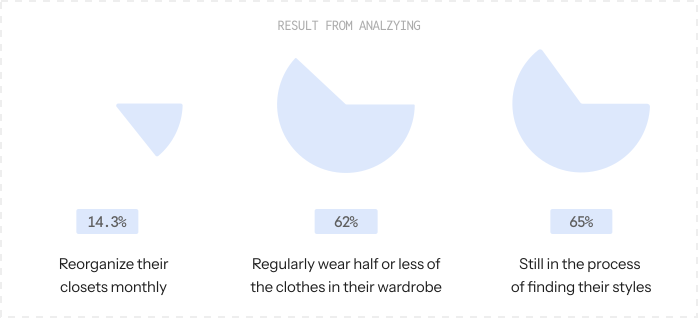
1. Struggle to keep track of what’s in their closet
When people can’t easily see what they have, it’s easy to forget about certain items. This lack of visibility often leads to them rebuying things they already own.
2. Lack of assurance with their current style
Without clear guidance and with limited time, it’s tough for people to feel truly confident in how they dress and express themselves.
3. Overwhelmed by the effort needed to try new styles
Even when they want to try something new, pairing outfits from what they already own feels like too much effort. So they fall back on the exact same “safe” outfits.
Most apps focus on separate features, not a connected experience
While many apps help you organize your closet or find inspiration, they rarely connect those two. This leaves you with no real support when you're actually making style decisions in the moment.
So turning that inspiration into a real outfit using what you already own, or truly defining your personal style remains a frustrating challenge.
ACLOSET
STYLEBOOK
WHERING
PUREPLE
LOOKSCOPE
DIGITAL CLOSET
OUTFIT PLANNING
STYLE ANALYTIC
EXPLORATION GUIDANCE
INSPIRATION MATCHING
What this led us to
Based on what we found from both our research and existing apps, we identified three key pain points and translated each of them into a corresponding opportunity area.
Our goal isn't just to 'organize' clothes, but create a more visible, guided process that helps users save time, explore different styles and feel more confident in finding their own.
Pain Point 1
No visibility into wardrobe
Opportunity Area 1
Make the wardrobe visible and easy to organize
Pain Point 2
No time and no guidance
Opportunity Area 2
Provide guidance while saving time in decision making
Pain Point 3
Limited ways to explore personal style
Opportunity Area 3
Help users discover style preferences through their existing wardrobe
Ideation
Shaping the product around a real closet journey
To ground our ideas, we created Jacqueline, a persona who embodies the frustration of feeling overwhelmed by a cluttered wardrobe.
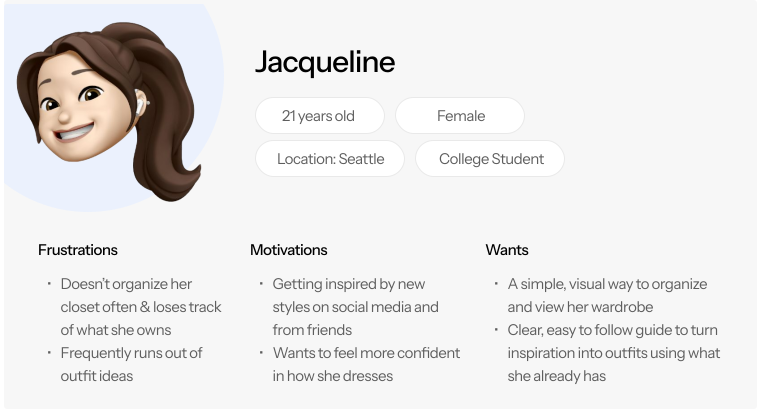
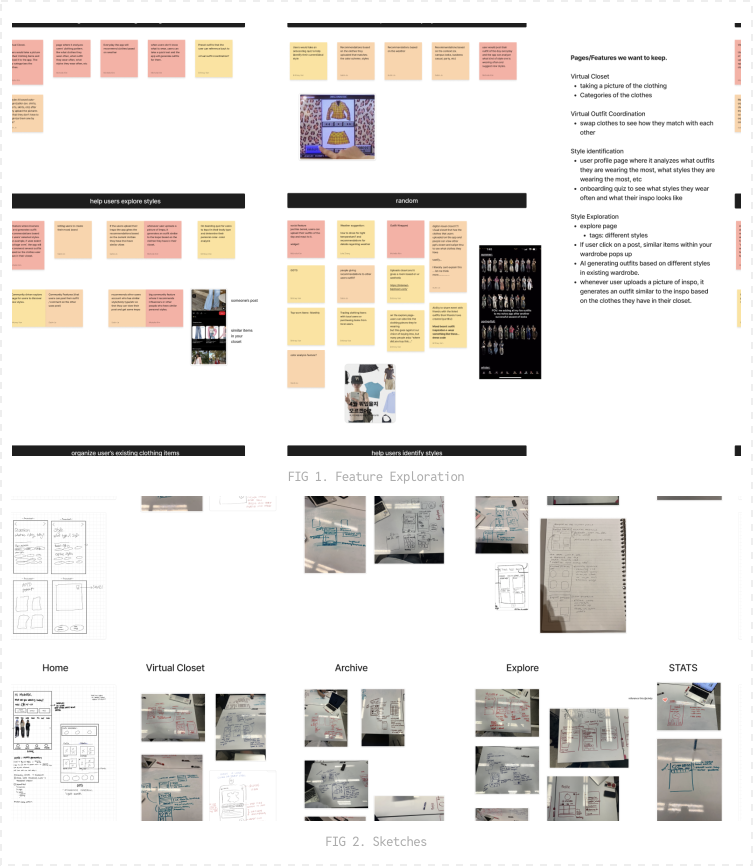
Using her journey as our guide, we clustered our ideas into three core themes: organizing existing inventory, identifying personal style, and exploring new looks. We also added some fun, random features and inspirations whenever something interesting came up.
This led us to define a clear information architecture with five main sections: Home, Virtual Closet, Explore, Archive, and Stats (which later integrated into ‘My Page’). With these pillars in place, we moved straight into sketching for each tab.
Mapping the flow and framework
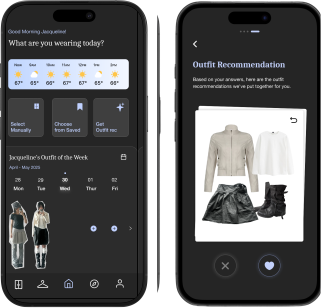
Since the Home page is the first thing users see, I focused on helping them decide today’s outfit quickly and with less effort. Whether they prefer selecting manually, picking from saved outfits, or getting AI-driven recommendations, the flow is designed to minimize cognitive load.
For recommendations, our research showed that users primarily consider occasion and weather when choosing outfits, so we tailored suggestions based on those factors, along with their preferred style.
In the low-fidelity prototypes, I surfaced the daily forecast at the top and added a weekly calendar on the bottom so users can track what they wore, recognize patterns over time, and plan ahead for special occasions.
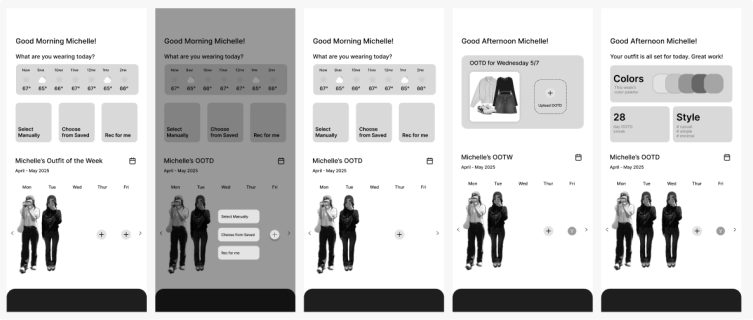
After putting together the low-fi in light mode, we felt like everything looked a bit flat and the clothes didn’t really stand out. Since the whole point of the app is to focus on outfits, we decided to switch to dark mode to make the clothing pop more.
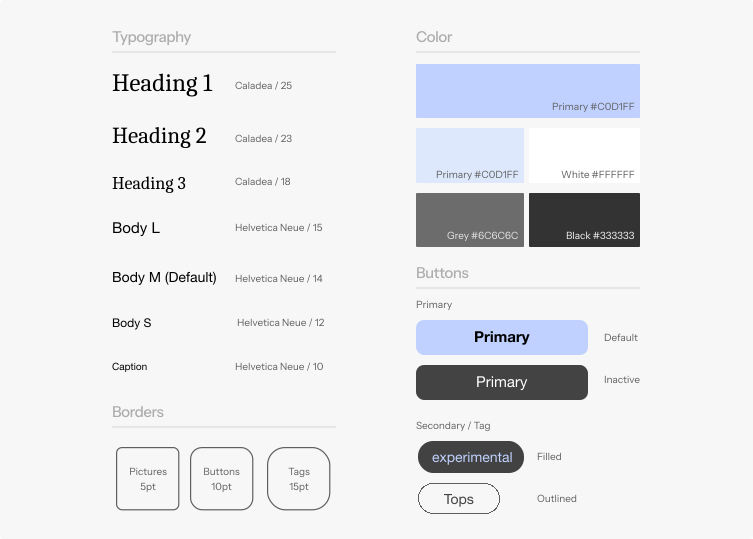
We also chose blue as our primary color to make sure the UI feels like a natural extension of your clothes rather than a distraction, since blue is one of the most universal colors in any closet (outside of neutrals). With this visual direction set, we started building out our design system and moving into high-fidelity prototyping.
Solution
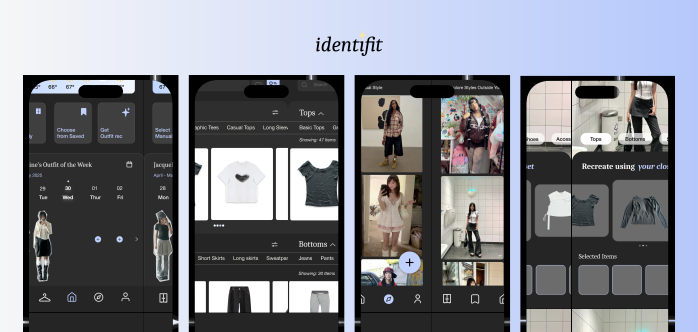
Capture your identity in every fit
Identifit is a personalized virtual closet that helps you organize what you own, track what you wear, and build outfits from pieces already in your closet.
01 Home
Tracking Outfits And Recognizing Style Patterns
Rather than asking users to define their style upfront, I designed Home around what they actually wear. Daily outfit logs gradually surface recurring patterns, helping users reflect on their style through their own behavior.
02 Get Outfit Recs
Guiding Decisions Without Adding Choices
Too many outfit suggestions can create another layer of decision-making. I designed recommendations to present one outfit at a time, allowing users to quickly accept or move past each suggestion without sorting through multiple options.
03 Virtual Closet
Balancing Visibility And Information Density
Showing the full wardrobe improves visibility, but displaying every category and item at once can quickly become overwhelming. The closet uses collapsible categories and flexible views to keep clothing accessible without overloading the screen.
04 Explore Styles
Connecting Inspiration With What You Own
Users often find inspiration visually, but recreating a look requires translating it into individual pieces. Explore bridges this gap by matching elements of an inspiration outfit with similar items already in the user's closet.
Validation
Validating our design decisions
After finishing our first iteration, we conducted two rounds of usability testing with a total of 10 participants to validate our design decisions. We used the NASA Task Load Index What is NASA Task Load Index(NASA-TLX)? A method where people rate mental effort, stress, and performance of the task (1–10 scale) to measure how demanding the experience felt, and followed up with a post-test survey to gather additional feedback.
Here's what we saw from the results and how I improved things.

Onboarding – Reducing Learning Curve
Before
Onboarding focused on personalization but provided little context for how the app worked
After
Added a feature walkthrough and a guided first task (uploading OOTD) to reduce learning curve
Virtual Closet – Reducing Information Overload
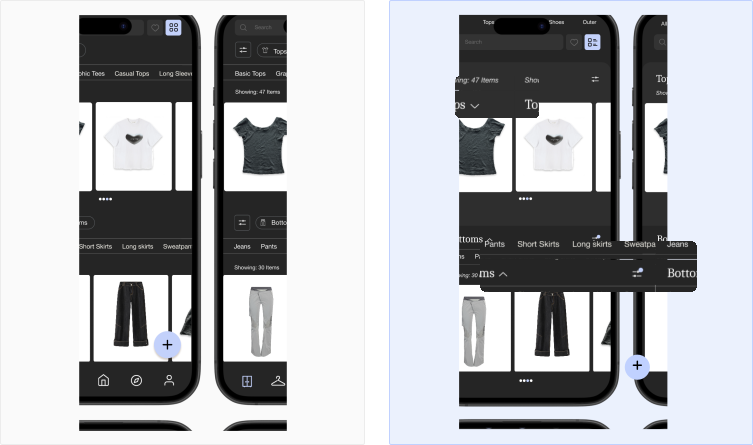
Before
Displaying every category at once made the wardrobe feel visually dense and difficult to navigate
After
Added collapsible categories (dropdown) and switchable grid and list views
Outfit Recs – Reducing Decision Fatigue
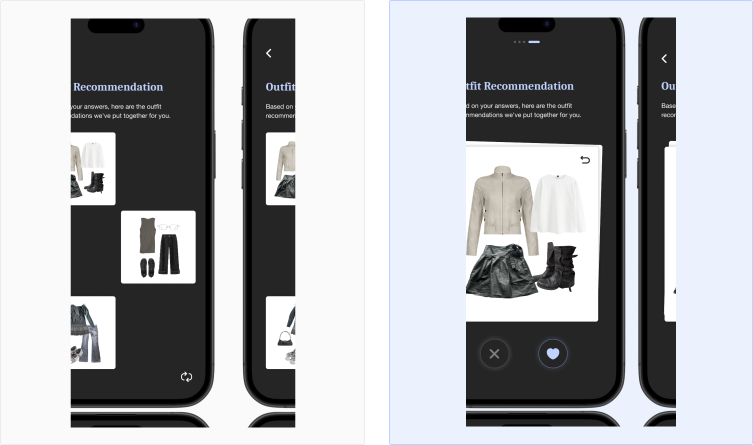
Before
Showing multiple recommendations encouraged comparison over decision-making
After
Redesigned the UI into Tinder-like swipe with one large outfit at a time
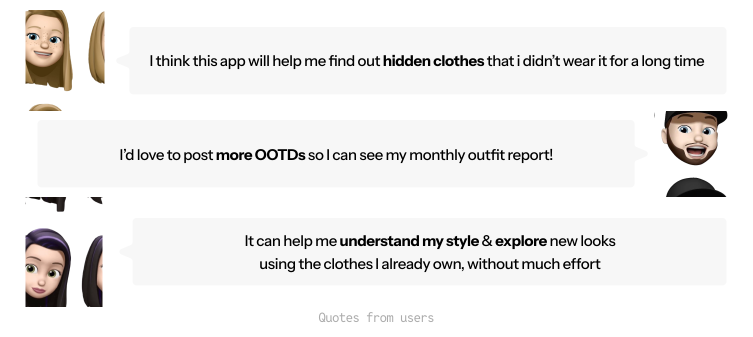
Beyond the tasks we tested, participants also shared direct feedback on their experience.
Reflection
Yayy! Our team won Best Overall Design 🏆

A Validated Outcome
At the DFA (Design For America) UW Showcase in May 2025, our project was selected as Best Overall Design among six teams, judged and voted on by three industry professionals. It was such a meaningful moment for us because it felt like a recognition of both our solution and how clearly we communicated the problem and our design approach.
Given More Time
During our interviews, we noticed that outfit decisions can be shaped by race and culture. For some participants, factors like modesty played a big role in how they choose what to wear. We started a second round of interviews with a more diverse group but couldn't explore this further due to time constraints. This was something I hadn't fully considered, and I'd want to dive deeper to design a more inclusive experience.
Possible Next Step
Right now, the experience focuses on a relatively closed system (your own wardrobe). But in reality, people are constantly influenced by external trends and inspiration. As a next step, I'd be interested in exploring how to connect external sources like fashion communities or lookbooks with users' own wardrobe data. By showing how others style similar pieces, this could help users expand their style without needing to buy new clothes.