Class Project Designed for Maybank Singapore

Milestone Seed
Helping Singapore's young families navigate
financial transitions with confidence
- Type
- Service Design
- Timeline
- Aug - Nov 2025
(4 months) - Team
- 3 Product Designers (Me)
- Deliverables
- Interactive Prototype
Service Blueprint
Presentation
Demo Video
Flyer
td;lr
Reframing financial planning as something people can grow into
This project was developed in a collaboration with Maybank Singapore to understand how young families approach financial planning and why it often feels overwhelming to begin.
As we dug deeper, we noticed that financial planning rarely happen as a single, complete plan. Instead, it takes shape through small decisions made over time, as people adjust to different life circumstances. This led us to focus on supporting how people navigate decisions as they go.
JUMP TO FINAL SOLUTIONThe Problem
How might we support young families navigate Singapore’s
interconnected financial milestones with clarity?
of young Singaporeans report
feeling financially unready
for major life events
Singapore’s major life milestones like BTOWhat is BTO?Build-To-Order: Singapore’s public housing application system for new HDB flats., CPFWhat is CPF?Central Provident Fund: Singapore’s mandatory social security savings scheme for housing, retirement, and healthcare. contributions, housing loans and child care costs come with multiple interconnected decisions that carry long term consequences. Priorities shift quickly, yet most financial systems are designed around products, rather than life stages.
This creates a mismatch in how financial tools are currently structured to support them.
Research
What we heard from families across Singapore
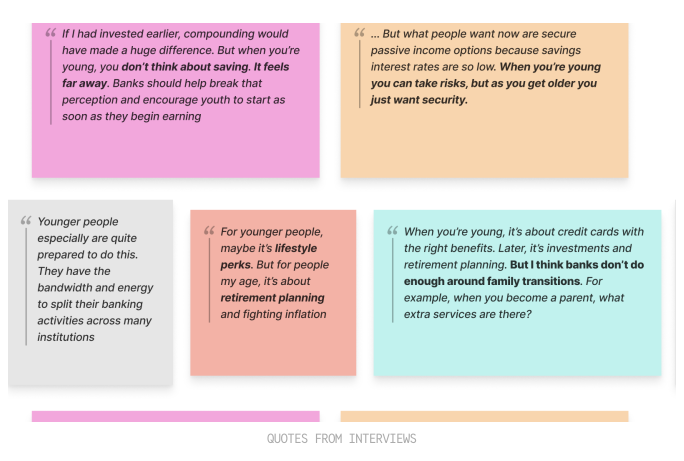
To ground this direction in real experiences, we spoke with families in Singapore at different life stages navigating key transitions (e.g. early marriage, child planning, retirement, etc). Through these conversations, we began to hear recurring patterns in how people think about and approach financial decisions.
1. Financial needs evolve with life stages
Priorities, risk tolerance, and spending habits shifts as their interest changes over time
2. Life transitions are emotional inflection points
Moments like marriage, home ownership, and parenthood concentrate many decisions into short, high pressure period
3. Traditional banking doesn’t support transitions
Existing tools remain static and product based, fail to adapt as people move through different life stages and changing priorities.
Why current systems don’t fit

NAV Planner
- Covers CPF, insurance, and retirement in one place
- Lets you simulate long term financial outcomes
- Requires detailed inputs before you can begin
- Assumes a fixed plan from the start
- Hard to adjust gradually as things change

360 Account
Saving Goals
- Makes it easy to set and track saving goals
- Uses incentives to encourage consistent saving
- Each goal is managed separately
- Hard to see how decision affects another
- Doesn’t reflect real life decisions across multiple priorities

TMRW Insights
- Shows where money is going
- Helps you understand habits over time
- Focuses on what already happened (past focused)
- Doesn’t help you decide what to do next
- No sense of timing for future actions

Wealth
Dashboard
- Brings different accounts into one view
- Gives a quick snapshot of your financial position
- Information is presented but not prioritized
- No guidance on what matters most right now
In short, existing systems are already good at plans, goals, data, and information. But what they’re missing is the flow of decisions, and that’s where we will focus on.
Opportunity to move with changing priorities
So we stepped back and looked at both our research results and competitor analysis and realized that what's missing isn't more features, but something that moves with people as their life changes.
Priorities don't stay fixed, and they shift quickly especially during key transition moments (e.g., buying a home) where multiple decisions stack and start affecting each other.
We decided to focus on supporting people through these transitions. From this, we identified key insights that led us to three core design directions.
Insights
Directions
Struggle to understand how
transitions unfold over time
Hard to visualize how one
decision affect another
Confidence during transitions
requires clarity, not just money
Ideation
Exploring ways to make recurring and one-time costs easier to compare.
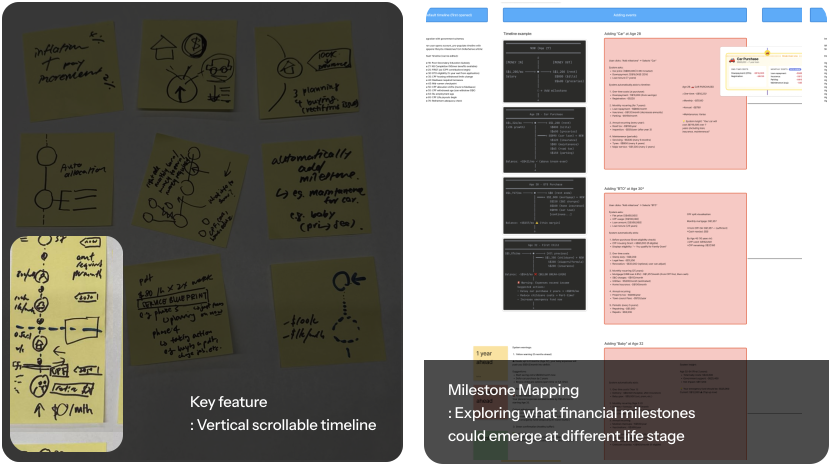
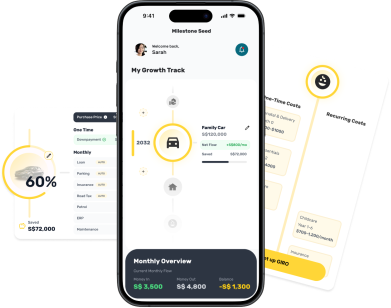
The key feature we settled with was a vertical, scrollable timeline on the main page. Instead of starting from products or accounts, the timeline starts from life events and places them in chronological order. This allows users to surface how one decision affects the next.
From this core timeline structure, we grouped features under three design focuses, each addressing a different friction we observed in research.
Control
Help users feel prepared, not reactive
- Deficit / Surplus Detection
- Growth Health Check
- Milestone setup & targets
Visibility
Make future milestones and their impact easier to understand
- Scrollable interactive timeline
- Progress indicator
- Recurring vs one time costs breakdown
Confidence
Support emotional clarity during transitions
- Auto grow
- Auto suggested branches (sub-milestones)
- Monthly overview (In/Out/Balance)
Solution
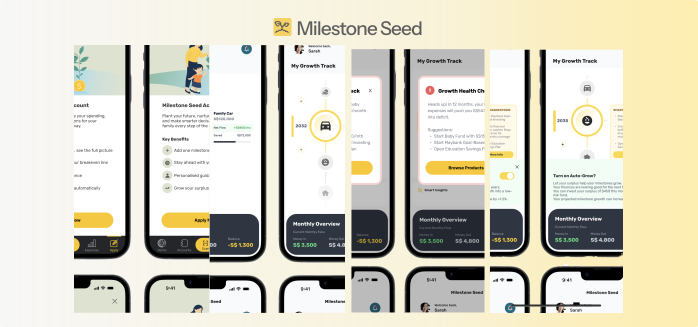
Designing for financial decisions as an ongoing process
Instead of setting everything upfront, your plan unfolds and adapts over time. Milestone Seed is built around your life milestones, so you can see what's coming, act when it matters, and adjust as things change.
01 Onboarding
Start where you are
Connect your account through Maybank2U and SingpassWhat is Singpass?Your all-in-one login in Singapore used for things like your ID info, income, and accessing government or banking services, so your financial profile is set up automatically.
Then choose the life milestone you want to plan for, and a personalized growth track is generated based on your current situation.
02 Time Visualization
See your future laid out
View your milestone across time, along with how your finance change along the way.
Tap into any milestone to see what it costs, when it happens, and how it affects your overall balance.
A monthly summary shows your income, expenses, and net balance, so you always know where you stand.
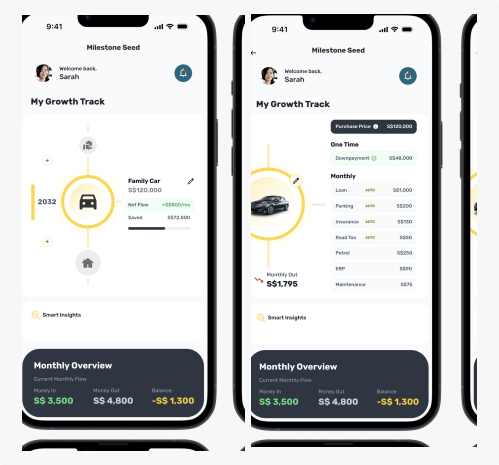
03 Goal Planning
Adjust as your life changes
As new milestones come up, you can add, edit, or remove them anytime.
Each milestone expands into detailed branches with one time costs and recurring expenses, helping you account for costs you might not have considered.
Your plan stays flexible, so you can adjust without having to start over.
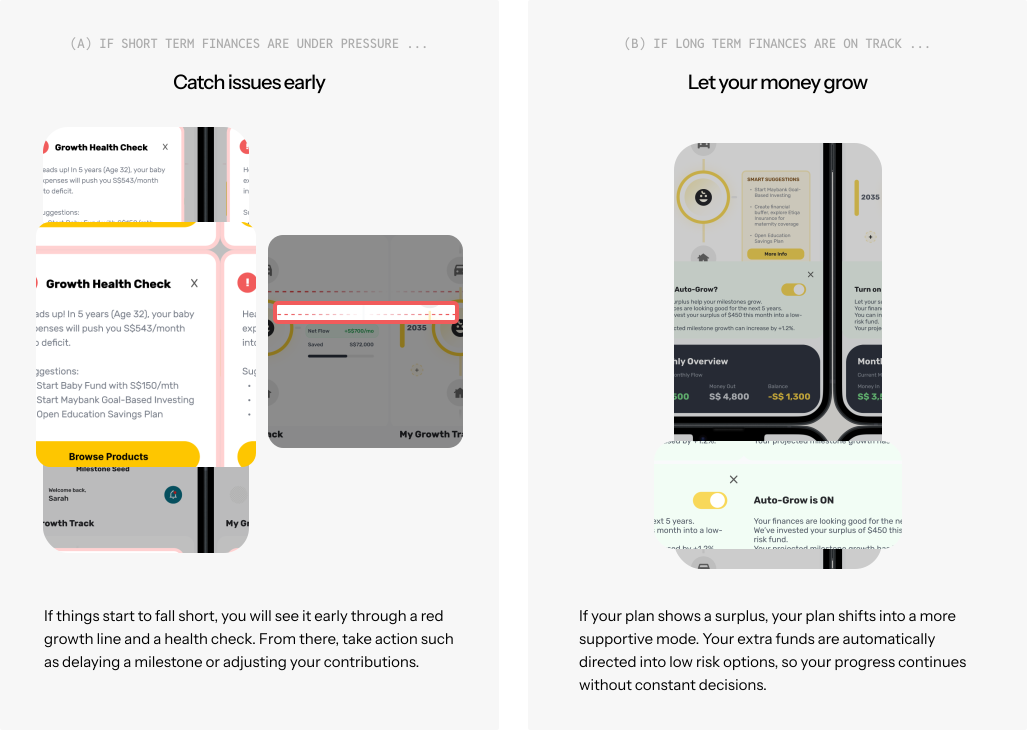
04 Taking Action
Delivery
Designing beyond the interface
To bring the concept into a real-world context, we mapped the experience through a service blueprint, laying out user actions and the underlying systems and touchpoints across each phase of the journey. We then created a simple flyer as a first touchpoint we could imagine handing to potential users, something approachable that introduces the idea.
We also hosted a small showcase with the Maybank Singapore team, walking them through how the experience plays out and hearing their thoughts in real time.
Reflection
Fun class I took from my exchange program!
Here's what I've learned:
Stakeholder Feedback
Across multiple presentations, I saw how our value proposition gradually became more focused. Much of the feedback centered on narrowing our target audience, refining an overly broad age range, and clearly defining the type of financial offering we were designing.
Given More Time
I would focus on further narrowing the user segment within young families and exploring how needs differ across those groups. I would also want to test whether the timeline and guidance feel intuitive for users who are unfamiliar with financial planning tools, without relying on additional explanation.